
NFPA 17A · NFPA 96 · UL 300
Commercial Kitchen Fire Suppression
Commercial cooking produces the most demanding fire hazard in ordinary business occupancies. Grease vaporizes, collects in hoods and ductwork, and burns at temperatures that ordinary extinguishing agents cannot control. A kitchen hood suppression system exists because a fire above a fryer cannot be fought by a person with an extinguisher.
These systems are also the equipment most likely to strand a restaurant. Health and fire inspections often gate your ability to operate, and a suppression system out of certification can close a kitchen the same day it is discovered.
We inspect and service wet chemical suppression systems protecting commercial cooking equipment, hoods, and duct across Western North Carolina.
How a kitchen suppression system works
A wet chemical system sits above your cook line with nozzles aimed at specific appliances and into the hood and duct. Detection is usually mechanical: fusible links held in tension along a cable run. When heat melts a link, the cable releases, the control head fires, and agent discharges through the nozzles while gas to the appliances shuts off automatically.
The agent works by saponification — it reacts with hot cooking oil to form a soapy layer that smothers the surface and cools it below reignition temperature. That is why water makes a grease fire worse and why a Class K extinguisher, which uses the same chemistry, is required near the cook line as backup.
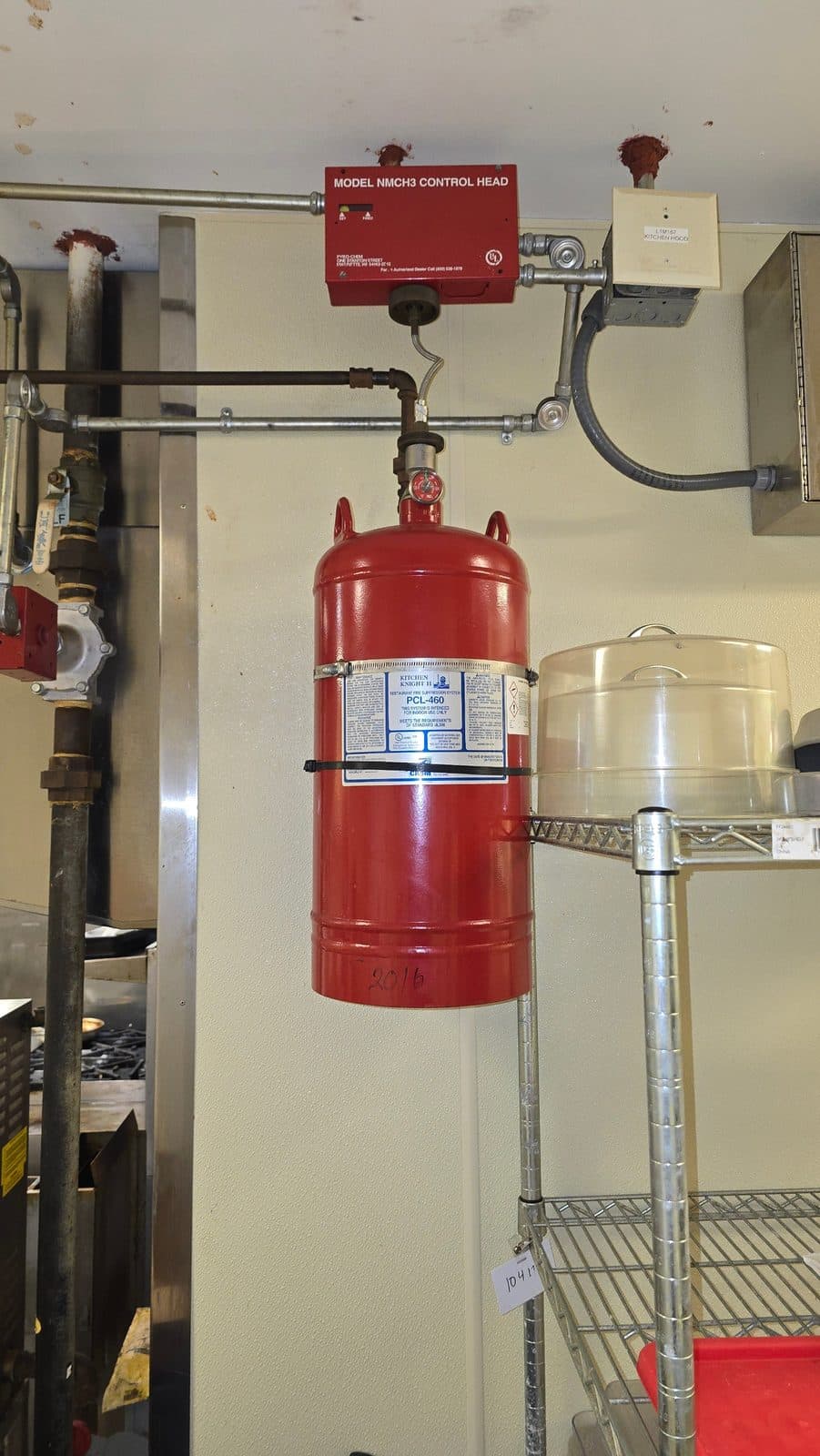
What we inspect during a semi-annual service
NFPA 17A and NFPA 96 call for these systems to be inspected on a semi-annual cycle. That inspection is considerably more involved than an extinguisher check.
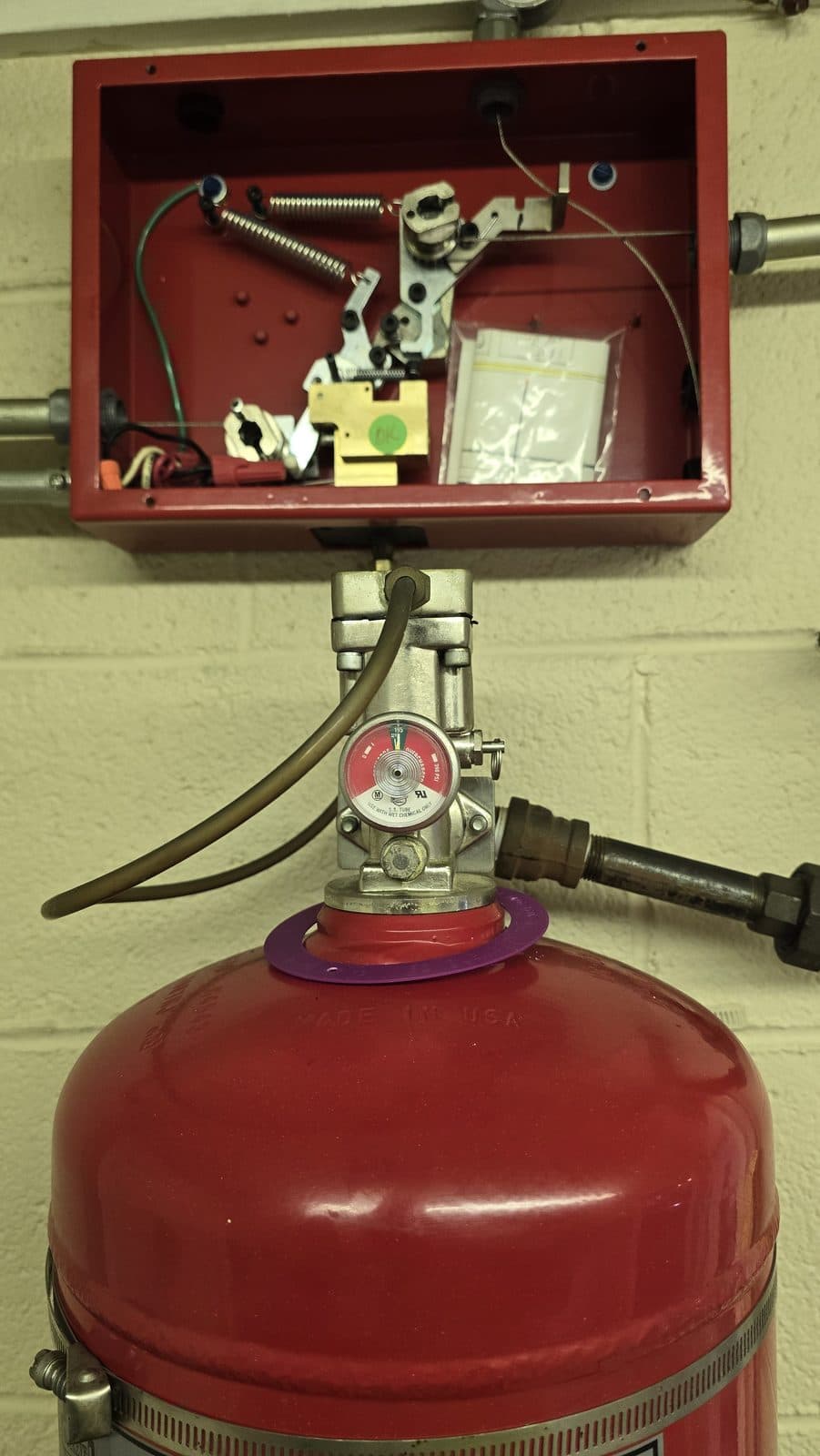
- Agent cylinder pressure, weight, and condition
- Control head function and mechanical release path
- Detection line tension, routing, and pulley condition
- Fusible links — condition, rating, and replacement on schedule
- Nozzle placement, aim, and blow-off caps intact and unclogged
- Piping and conduit secure, undamaged, and correctly supported
- Manual pull station accessible, unobstructed, and correctly labeled
- Gas shutoff valve operation and reset
- Hood and duct coverage checked against the actual appliance layout
- System certification tag and documentation updated
When a system needs service outside its normal interval
The semi-annual cycle is the baseline. Several situations require attention regardless of when the system was last serviced — and the appliance-move one catches almost everybody.
- After any discharge, accidental or otherwise — the system is empty and must be recharged
- After moving, replacing, or adding a cooking appliance under the hood
- After a kitchen remodel that changes the appliance layout
- When nozzles no longer aim at the appliance they are meant to protect
- When the certification tag has expired
- When components are damaged, corroded, or grease-caked
- When a fire inspection has cited the system
UL 300 and older systems
UL 300 is the standard that modern kitchen suppression systems are tested to. It was introduced after changes in commercial cooking — higher-efficiency appliances, deeper fryers, and vegetable-based oils that burn hotter — made older dry chemical systems inadequate for the hazard.
Older dry chemical kitchen systems that predate the standard generally cannot be brought into compliance by servicing them. They have to be replaced with a UL 300 compliant wet chemical system. If your building has an older system, we will tell you plainly rather than continuing to tag equipment that will not pass.
Class K extinguishers and hood cleaning
A suppression system on its own is not complete kitchen fire protection. Class K extinguishers are required near the cook line as backup and for small fires that do not warrant discharging the whole system. They are on the standard annual extinguisher cycle, and we coordinate them with your suppression service so both come due at the same visit.
Hood and duct cleaning is a separate service on its own schedule, driven by how much and what type of cooking you do — solid fuel and high-volume operations need it far more often than a low-volume kitchen. We do not perform hood cleaning, but grease accumulation is one of the things we flag during inspection, because a suppression system discharging into a grease-loaded duct is fighting a much larger fire than it was designed for.
Kitchens we serve
- Restaurants and diners
- Bars, taprooms, and breweries with kitchens
- Church and community fellowship kitchens
- School and institutional cafeterias
- Assisted living and care facility kitchens
- Hotel and event venue kitchens
- Commissaries and prep kitchens
Church and volunteer-run kitchens are worth a particular mention. They often have full commercial cooking equipment installed years ago by a member of the congregation, no maintenance history, and nobody who knows the system exists until an inspection finds it.
Common questions
How often does a kitchen hood suppression system need to be inspected?
Semi-annually under NFPA 17A and NFPA 96. Your local authority having jurisdiction may require additional inspection, and your insurer may as well.
We moved a fryer. Does that matter?
Yes, and this is the single most common reason a system quietly stops protecting a kitchen. Nozzles are aimed at specific appliances by type and position. Moving, replacing, or adding equipment under the hood means the system needs to be reviewed and likely re-nozzled, even if the tag is still current.
What is UL 300 and does our system comply?
UL 300 is the standard modern wet chemical kitchen systems are tested to. Older dry chemical systems that predate it generally cannot be serviced into compliance and need replacing. We can tell you which you have during an inspection.
Our system discharged. What now?
Call us. The system is empty and provides no protection until it is recharged, and in most jurisdictions the kitchen cannot operate in that condition. We will recharge it, replace the fusible links, verify nozzle coverage, and re-certify it.
Do we still need fire extinguishers if we have a hood system?
Yes. Class K extinguishers are required near the cook line, and you will need ABC coverage in the rest of the building. The hood system covers the appliances it is aimed at, not the kitchen as a whole.
Kitchen Suppression by location
Based in Claremont, serving commercial buildings within roughly 90 miles.